
What Is a Digital Hotel Concierge and How Does It Work?
Learn how a digital hotel concierge works, compare QR web access with hotel apps and kiosks, and follow a guest request from scan to staff response.
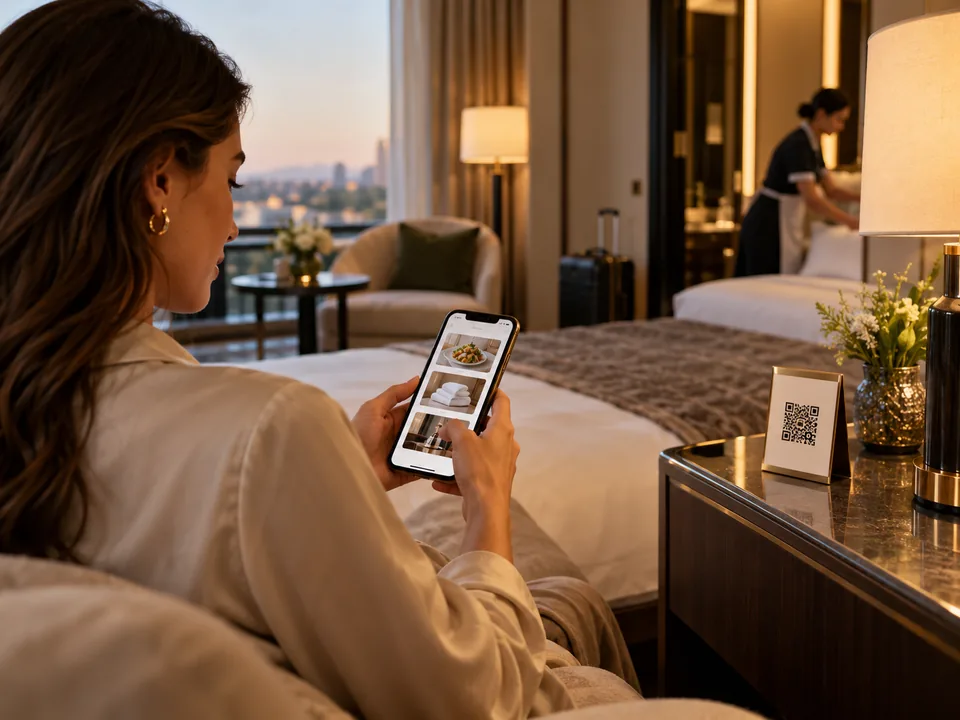
A digital hotel concierge is a mobile service layer that helps guests find information, request hotel services and communicate with the property without depending on a phone call or a trip to reception for every interaction. It can bring room service, housekeeping, hotel information, local recommendations and concierge communication into one guest-facing experience.
The simplest versions act like a digital directory. More connected platforms can carry room or stay context, create structured requests, support chat and status updates, and use AI to help understand what a guest needs. QRNeto approaches the hotel digital concierge as part of the wider guest journey rather than as a standalone chat window.
How a digital hotel concierge works
A guest normally reaches the experience from a QR code placed in the room, on a key card, at reception or in another hotel touchpoint. Scanning opens a mobile page in the browser, so the guest can start without installing a dedicated hotel app.
From there, the exact options depend on the hotel. The experience can provide access to room service, housekeeping, guest services, hotel facilities, local recommendations and a direct concierge conversation. If the QR code is associated with a room or stay context, supported requests can arrive with that context already attached.
Example: a towel request from scan to response
- Open the experience. The guest scans the room QR code and opens the hotel page in the browser.
- Choose the service. They select the configured housekeeping option, or ask for towels through an available concierge conversation.
- Review the request. The guest checks the details and any room context before submitting.
- Send it to the hotel. The request enters the hotel's configured workflow. A submitted request is not a promise that towels have already been delivered.
- Receive a response. The team handles the request; where status updates are supported, the guest can follow its progress. Human contact remains available for an unusual or unresolved need.
This is an example workflow, not a guarantee that every hotel has the same services or response times. The property decides what guests can request and how its team responds.
Digital concierge for hotels vs a static hotel information page
A static information page can answer basic questions such as breakfast hours, Wi-Fi instructions or check-out time. A digital concierge for hotels becomes more useful when the guest can take action from the same place.
For example, the guest may discover that extra towels are available and submit the request immediately. They may open the room-service menu, customize an order and send it to the hotel. They may ask a question in chat or discover a nearby restaurant selected by the property.
The difference is the move from information to service workflow.
QR web concierge, hotel app or lobby kiosk?
These are different ways to reach a service. The right choice depends on where the guest is and what the hotel needs the interaction to do.
| Access option | How guests use it | What to check |
|---|---|---|
| Hotel information page or PDF | Open a link to read information. | Whether guests can also contact staff or submit a request. |
| QR web concierge | Scan a code and use a browser on their own phone. | Room context, clear actions, mobile usability and staff response. |
| Dedicated hotel app | Install and open an application. | Installation effort, supported devices and whether guests need app-specific functions. |
| Lobby kiosk | Use a shared screen at a fixed location. | Physical access, accessibility, privacy and a route to staff. |
QRNeto's hotel experience uses the QR web approach. A conversational AI layer is an optional way to help guests navigate supported information and services; it is not what makes every digital concierge work.
What services can a hotel digital concierge include?
Hotels can structure the experience around their own operation. Common areas include:
- Room service: mobile menus, item options, ordering and relevant status updates.
- Housekeeping: requests for cleaning, towels, linen, pillows or other configured room needs.
- Guest services: hotel facilities, spa information, transport, business services and other property-specific services.
- Concierge chat: a direct conversation between the guest and hotel staff.
- Explore nearby: hotel-selected recommendations for restaurants, attractions and useful places.
- Minibar: item discovery or supported minibar requests.
- Hotel information: opening hours, policies and practical stay information.
A hotel does not need to activate every service at once. The experience can start with the workflows that create the most repetitive questions or the greatest friction for guests.
Where an AI hotel concierge adds value
An AI hotel concierge can make the interface easier when guests do not know which menu or service category to open. A guest may type or say what they need in natural language. The AI layer can help interpret the intent and guide the guest toward the relevant information or action.
AI can also support multilingual experiences and content workflows, but it should work within the services the hotel has actually configured. It should not promise facilities, availability or policies that the property has not provided.
For a closer look at conversational assistance and human handoff, read AI Hotel Concierge: What It Can and Cannot Do.
Why multilingual support matters
Hotels regularly serve guests who do not share a first language with the reception or service team. A digital experience can present the same hotel structure in multiple enabled languages, helping guests understand services before they submit a request.
QRNeto uses English as the canonical source for managed business content, with localized values available for enabled languages. This creates a consistent base while allowing each hotel to review and override its guest-facing translations.
Can a digital concierge reduce reception calls?
It can give guests another route for routine needs, which may reduce some repetitive calls, but the effect depends on how the hotel implements and promotes the service. A clear mobile path for common requests can let reception focus on interactions where a person is genuinely needed.
The objective should be better routing, not blocking human contact. Guests should still be able to reach hotel staff when the request needs conversation or judgment.
Guest experience platform or separate tools?
Hotels often accumulate separate QR codes, PDFs, chat tools and booking links. That can solve individual problems but create a fragmented guest journey. A hotel guest experience platform can provide one recognizable entry point and organize several services under the same interface.
The hotel can still keep existing operational systems. A guest-experience layer does not necessarily replace a PMS, POS or other specialist system. Integrations depend on what the property uses and what connections are configured.
What to look for when choosing a digital hotel concierge
- No unnecessary guest friction: the experience should open quickly and work well on mobile.
- Room or stay context: supported requests should carry the information staff need to act.
- Structured services plus free-form communication: guests need both quick actions and a way to ask unexpected questions.
- Multilingual content: language switching should be part of the guest experience, not a separate site.
- Status visibility: where appropriate, guests should know whether a request or order has been received and progressed.
- Hotel control: staff should control services, information, availability and guest-facing content.
- Scalable architecture: the system should be able to add new service modules without rebuilding the guest journey.
How QRNeto Hotels approaches digital concierge
QRNeto Hotels combines digital concierge with other guest services in a QR-based mobile experience. A hotel can bring together room service, housekeeping, concierge chat, minibar, nearby recommendations and supported service requests while keeping the experience accessible from the guest's own phone.
The platform is designed so the QR code becomes a consistent digital service point throughout the stay. Explore the full QRNeto hotel guest experience or browse more QRNeto Resources as the hotel content cluster grows.
Try the guest journey before choosing a setup
Open the QRNeto Hotels live demo to explore the guest interface. Then review the digital concierge use case for boutique hotels and decide which services your own property would make available.
During evaluation, check how a request is submitted, what acknowledgement the guest sees and how they can contact a person. Demo availability does not establish that a specific integration or hotel workflow is included in your deployment.
Key takeaway
A digital hotel concierge is most useful when it does more than display hotel information. By connecting discovery, communication and service requests in one mobile journey, it can make routine interactions clearer for guests and easier for hotel teams to route and manage.